Why seasonal variation matters
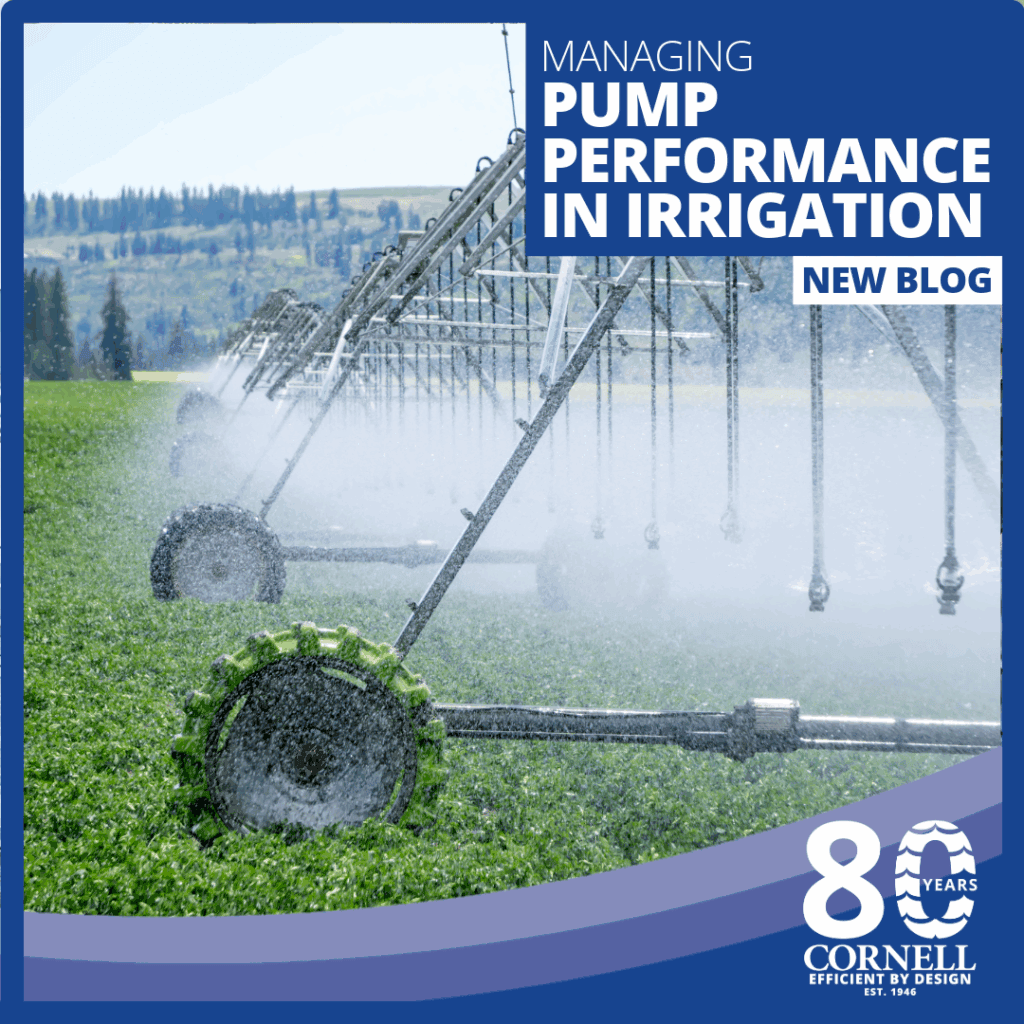
During peak irrigation periods, pumps often run longer hours and at higher flow rates. Even small differences in efficiency during these periods can significantly impact energy use and operating costs over the season.
When demand drops, pumps may operate outside their optimal range. Running too far from the pump’s best efficiency point (BEP) can lead to:
- Reduced efficiency
- Increased vibration and component wear
- Shorter equipment lifespan
Over time, these effects increase maintenance needs and reduce overall system reliability.
Strategies for maintaining performance
To manage seasonal load changes effectively, operators can focus on a few key practices:
- Match output to demand
Adjusting flow to meet real-time needs helps maintain efficiency and avoid overworking equipment - Operate near BEP when possible
Pumps running within their intended range experience less stress and longer service life [cornellpump.com] - Choose high-efficiency pump designs
Pumps engineered for efficiency can reduce power consumption and operating costs over long irrigation periods - Monitor system conditions
Tracking flow, pressure, and performance helps identify inefficiencies before they lead to failures
Supporting reliable irrigation
Reliable pump performance is essential to maintaining crop health and maximizing yields. By adapting to seasonal demand and operating within optimal ranges, irrigation systems can improve efficiency, reduce wear, and lower total costs.
Cornell pumps are designed to operate efficiently across varying conditions, helping growers manage seasonal fluctuations while maintaining dependable performance in the field.