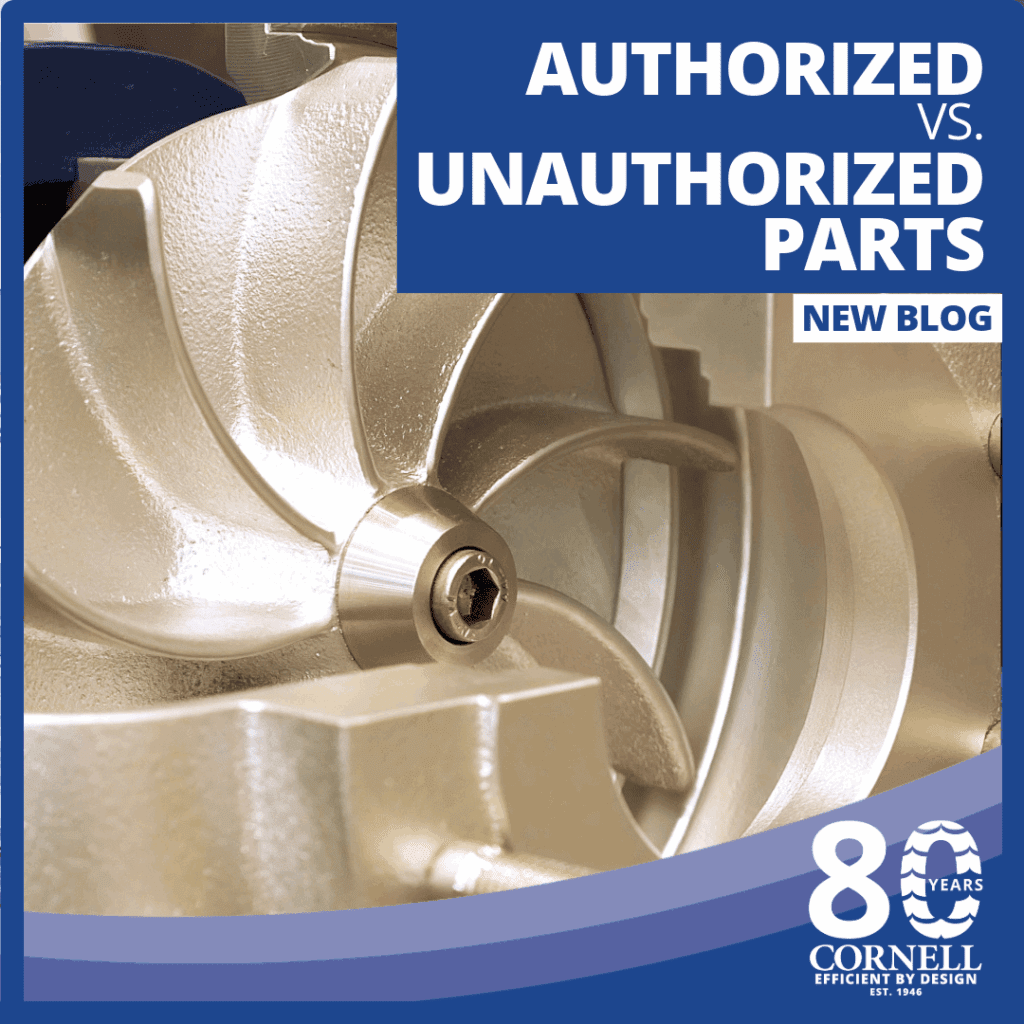
Authorized parts are designed to meet strict engineering standards, often with tolerances measured down to fractions of a millimeter, ensuring seamless compatibility with original equipment. This precision reduces installation errors and helps maintain optimal hydraulic performance. OEM kits also simplify maintenance by including all required components, eliminating guesswork and ensuring accurate assembly. In contrast, unauthorized parts may not align perfectly with the pump’s design, increasing the risk of vibration, misalignment, or premature wear, issues that can compromise both performance and reliability over time.
Key advantages of authorized (OEM) parts include:
- Exact fit and engineered compatibility with your pump
- Consistent performance and hydraulic efficiency
- Simplified installation with complete, matched components
- Access to manufacturer support and technical expertise
Beyond performance concerns, using unauthorized parts can introduce significant operational and financial risks. Components that are not built to the original specifications may fail under demanding conditions, leading to unplanned downtime or even catastrophic equipment damage. Additionally, many manufacturers warn that non-OEM parts can void warranties, leaving operators responsible for repair costs that would otherwise be covered. Safety is another critical factor—substandard materials or poor construction can increase the likelihood of leaks, seal failures, or mechanical breakdowns in high-pressure or hazardous environments.
Common risks of unauthorized parts include:
- Poor fit, misalignment, or increased vibration
- Reduced efficiency and higher operating costs
- Accelerated wear on critical components
- Voided warranties and limited support
- Greater risk of unexpected failure or safety concerns
Ultimately, the decision between authorized and unauthorized parts comes down to protecting your investment. While non-OEM options may offer short-term savings, they often lead to higher total costs through reduced efficiency, increased maintenance, and greater risk of failure. Authorized parts, on the other hand, provide consistency, technical support, and the assurance that your system will perform as intended. For operators who depend on reliable pump performance in demanding applications, choosing genuine parts is a strategic decision that safeguards uptime, safety, and long-term value.