Frame-mounted pumps
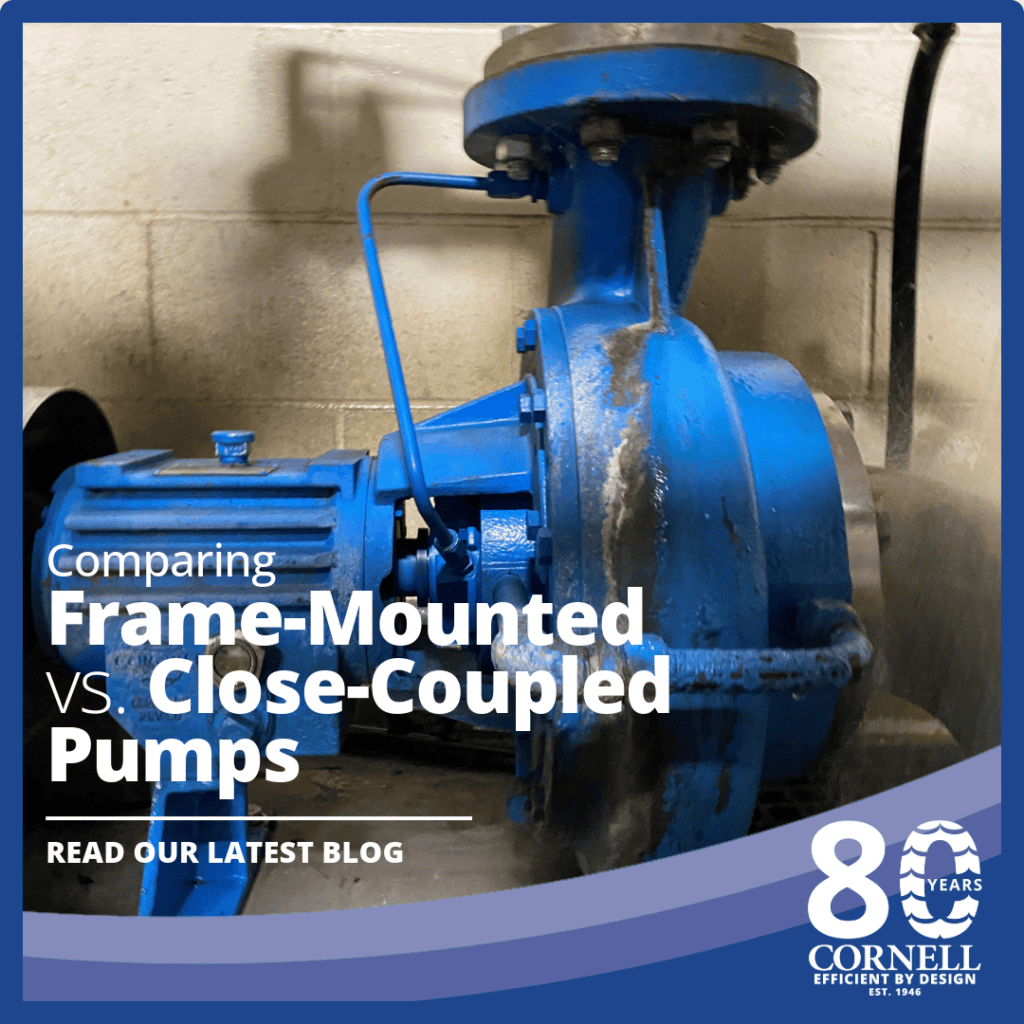
Frame-mounted pumps use a separate bearing frame and flexible coupling between the pump and motor. This design is often preferred in industrial and municipal applications because it allows for easier maintenance and servicing.
Benefits include:
- Easier access to components
- Simplified maintenance and repairs
- Better suited for larger, higher-horsepower applications
- Greater flexibility for customized system designs
Close-coupled pumps
Close-coupled pumps mount the impeller directly on the motor shaft, creating a more compact package. These systems are popular where installation space is limited and maintenance demands are lower.
Benefits include:
- Smaller footprint
- Simpler installation
- Lower initial cost
- Reduced alignment requirements
Choosing the right fit
The best configuration depends on your operational priorities. Frame-mounted pumps are often the better choice for demanding applications where uptime and serviceability are critical. Close-coupled pumps can be an excellent solution where space savings and simplicity are the primary goals.
Cornell offers a range of pump configurations designed to meet diverse application needs, helping operators balance performance, maintenance, and long-term value.