Why intake design matters
When flow entering a pump is disrupted, it creates unstable operating conditions. Turbulence and uneven velocity profiles can cause:
- Vibration and increased wear on components
- Reduced efficiency and inconsistent performance
- Cavitation, which can damage impellers and shorten pump life
These issues often originate upstream, making intake design a critical but sometimes overlooked part of system performance.
Key design considerations
Improving intake conditions doesn’t always require major system changes. A few design best practices can make a significant difference:
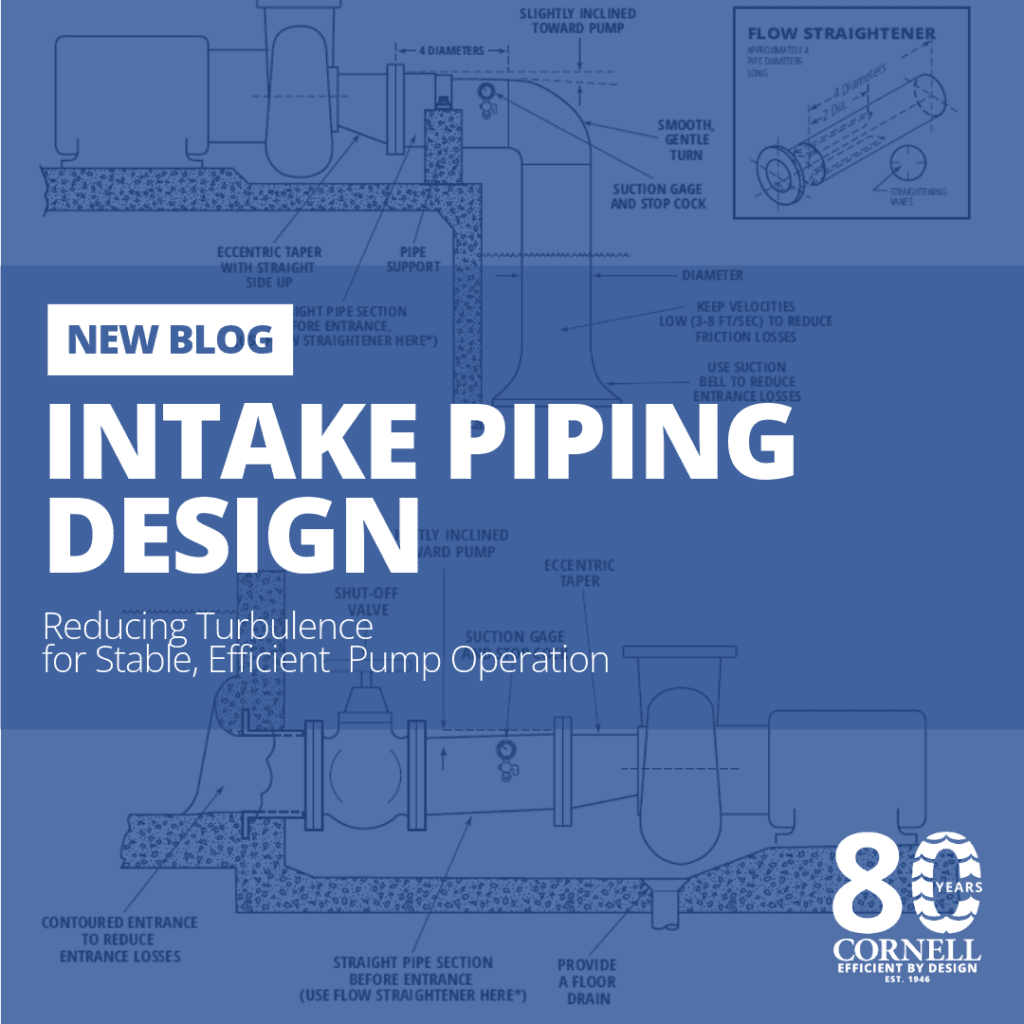
- Provide adequate straight pipe runs
Straight sections before the pump help stabilize flow - Minimize sharp bends and restrictions
Sudden changes in direction can create turbulence and uneven velocity - Ensure proper suction conditions
Avoid air entrainment and maintain consistent fluid supply - Match piping to pump requirements
Proper sizing helps maintain smooth, balanced flow
Supporting efficient operation
A well-designed intake system allows pumps to operate closer to their optimal range, improving efficiency and reducing wear. By minimizing turbulence and stabilizing incoming flow, operators can extend equipment life and improve reliability across the entire system.
Cornell pumps are engineered for durability and performance, but proper system design, especially on the intake side, is essential to getting the most out of any pump installation.